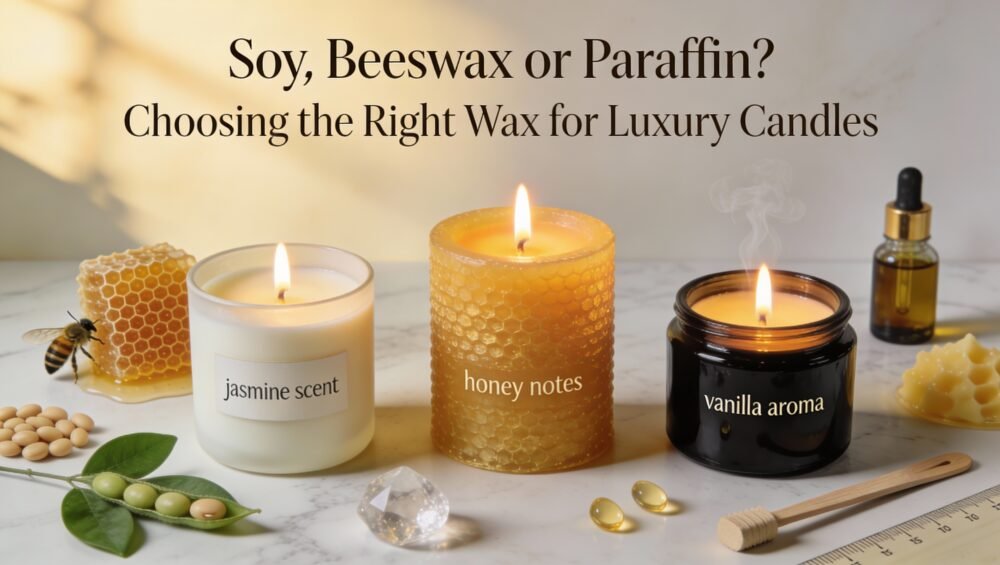
Choosing the right wax is the foundation of crafting luxury candles that burn cleanly, scent strongly, and exude sophistication. Soy, beeswax, and paraffin each offer unique properties, from eco-friendliness to scent throw and aesthetics, allowing artisans to tailor their creations to premium standards. Understanding their differences empowers you to select the ideal wax for high-end candles that delight discerning customers.
Understanding Wax Types
Soy wax, derived from soybean oil, dominates the natural candle market for its sustainability and creamy texture. It burns slowly at a cool temperature, minimizing soot and extending burn time up to 50% longer than paraffin. Beeswax, harvested from honeycombs, is a natural by-product prized for its honeyed aroma and golden hue, naturally purifying air by releasing negative ions. Paraffin, a petroleum by product, remains popular for its affordability and superior scent diffusion, though it’s often vilified for synthetic origins.
Each wax influences performance metrics like melt pool depth, wick compatibility, and fragrance retention. Luxury candles prioritize wax that supports complex essential oil blends without compromising burn quality. Testing small batches reveals how additives like vybar or stearin enhance hardness and opacity for a professional finish.
Soy Wax: Eco-Luxury Choice
Soy wax appeals to the environmentally conscious luxury buyer seeking clean, vegan options. Its plant-based composition ensures a biodegradable product with low toxicity, ideal for wellness brands. When properly wicked, soy achieves a full melt pool that amplifies subtle scents like oud or jasmine, creating an intimate ambiance.
However, soy’s soft texture demands double-wicking to prevent tunnelling and requires fragrance loads up to 10% for optimal throw. Blending with coconut or palm for hybrid formulas boosts creaminess and hot throw. For luxury appeal, opt for 100% pure soy over blends diluted with paraffin—customers pay premiums for authenticity, with brands like Diptyque emulating this purity.
Beeswax: Natural Elegance
Beeswax elevates candles to artisanal status with its subtle, warm glow and inherent honey-vanilla scent that layers beautifully under added fragrances. Prized for hypoallergenic properties, it filters allergens and pollutants, positioning it as a health-focused luxury item. Its high melt point (around 145°F) yields a stable flame and minimal dripping, perfect for pillar or taper designs.
Drawbacks include higher cost—three times paraffin—and variable coloration from hive sources, which luxury makers embrace for rustic authenticity. Scent throw lags behind soy or paraffin, so pair with potent oils at 6-8% load. Filtering raw beeswax ensures clarity, while sheet-rolled beeswax offers DIY opulence for bespoke collections.
Paraffin Wax: Performance Powerhouse
Paraffin excels in luxury candles where scent dominance reigns, diffusing aromas up to 20 feet with unmatched hot and cold throw. Its crystalline structure holds 12% fragrance oil, enabling bold profiles like tobacco vanilla or black truffle. Affordable scalability suits high-volume production without sacrificing glass adhesion or smooth tops.
Critics cite petroleum roots and potential toxins, but refined paraffin’s (fully hydrogenated) burn cleanly with proper formulation. Luxury houses like Jo Malone use paraffin blends for consistent performance. Enhance with UV inhibitors to prevent fading and slack wax for opacity mimicking natural alternatives.
Factors for Luxury Candle Selection
Luxury demands alignment with brand ethos—soy for green certifications, beeswax for organic claims, paraffin for scent innovation. Consider vessel type: soy clings best to jars, beeswax suits freestanding melds, paraffin versatile across formats. Climate matters; hotter regions favour high-melt beeswax to resist warping.
Fragrance compatibility is paramount—test oil solubility, as essential oils bloom differently. Wick pairing prevents issues: cotton or wood for soy’s cool burn, ECO wicks for paraffin’s vigour. Additives like stearic acid unify properties, creating hybrid waxes that marry soy’s purity with paraffin’s punch.
Regulatory compliance elevates trust: ensure ASTM standards for flash points and labelling. Luxury buyers scrutinize burn tests—aim for 4-hour sessions without smoking.
Crafting Tips for Premium Results
Source high-grade waxes: Golden Brands soy, Koster Keunen beeswax, IGI paraffin. Melt at precise temperatures (soy 185°F, beeswax 160°F, and paraffin 200°F) using double boilers. Cool slowly for even crystallization, preventing sinkholes. Cure 1-2 weeks post-pour for peak scent evolution.
Innovate with layers: soy base topped with beeswax for dual aromas, or paraffin cores in soy shells for throw and sustainability. Package in matte black glass with embossed lids for tactile luxury.
Building a Luxury Candle Brand
Start small: formulate three signatures—one per wax—to showcase versatility. Price soy at $35-50/8oz, beeswax $50-70, paraffin $40-60, reflecting materials and allure. Market transparency: highlight wax origins, burn times, and testing on Instagram reels.
Sustainability sells—offer soy refills or beeswax wraps. Collaborate with perfumers for exclusives. Track trends: 2025 sees hybrid waxes rising, blending soy-paraffin for 360° throw without compromise.
Mastering wax choice transforms hobbyists into luxury creators. Experiment boldly; your signature scent awaits in the perfect pour. Whether soy’s whisper, beeswax’s glow, or paraffin’s roar, the right wax ignites enduring elegance.